Mapping in the dark with PIX4Dcatch and DIY Lighting
Photogrammetry is a powerful and versatile mapping method, but it has one fundamental limitation: it relies entirely on reflected light. So while your 3D model will thrive in well-lit conditions, when the light fades, photogrammetry starts to struggle. This is where active sensors, like LiDAR, have a clear advantage, as they can operate effectively in complete darkness by emitting and measuring their own light source.
To solve this, we created a custom 3D-printed mount that attaches an off-the-shelf external light source directly beneath an iPhone with the PIX4Dcatch scanning app and Emlid Reach RX. By flooding the immediate area with light, we ensured the camera would capture the sharp, low-noise images required for a high-accuracy workflow. This simple hardware integration enables reliable, 24/7 reality capture in complete darkness or low-light conditions without sacrificing RTK precision.
We demonstrated this technique on two scenarios that closely mirror real-world conditions: a vehicle collision scene and an indoor utility cabinet documentation.
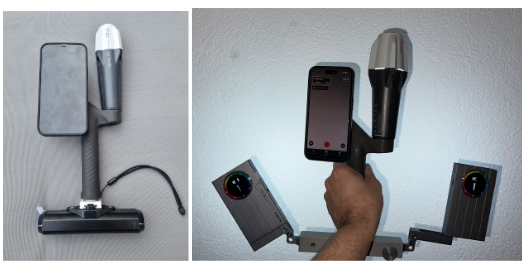
Nighttime accident documentation
Many accidents occur at night or in areas with limited light, such as tunnels. Traffic accidents need rapid documentation as roads should not be restricted or fully closed for long. Standard night-time accident documentation relies on expensive, bulky lighting. Our new extension for PIX4Dcatch provides a portable, affordable alternative, allowing teams to use their existing mobile RTK tools to clear scenes quickly—even in total darkness.
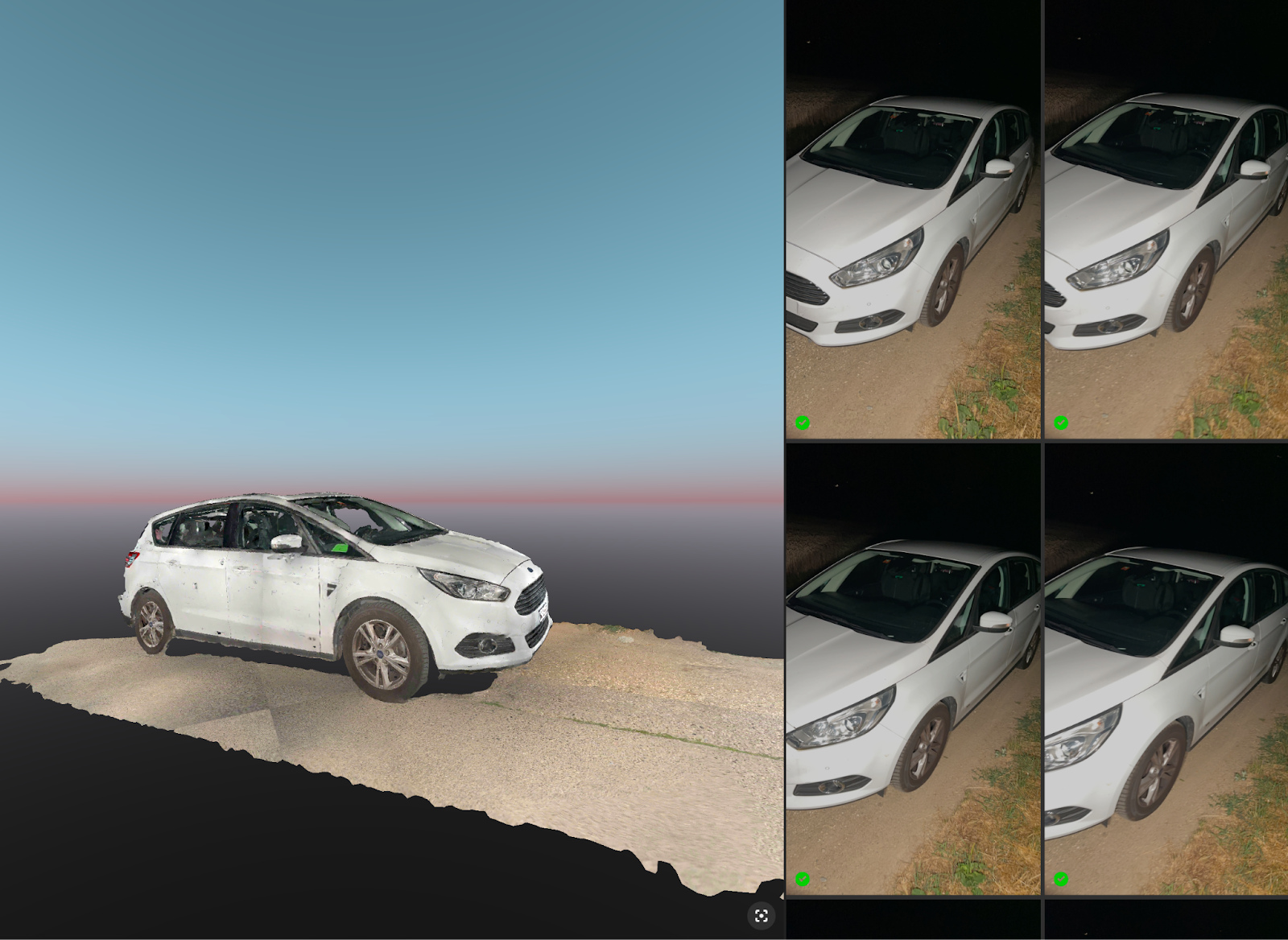
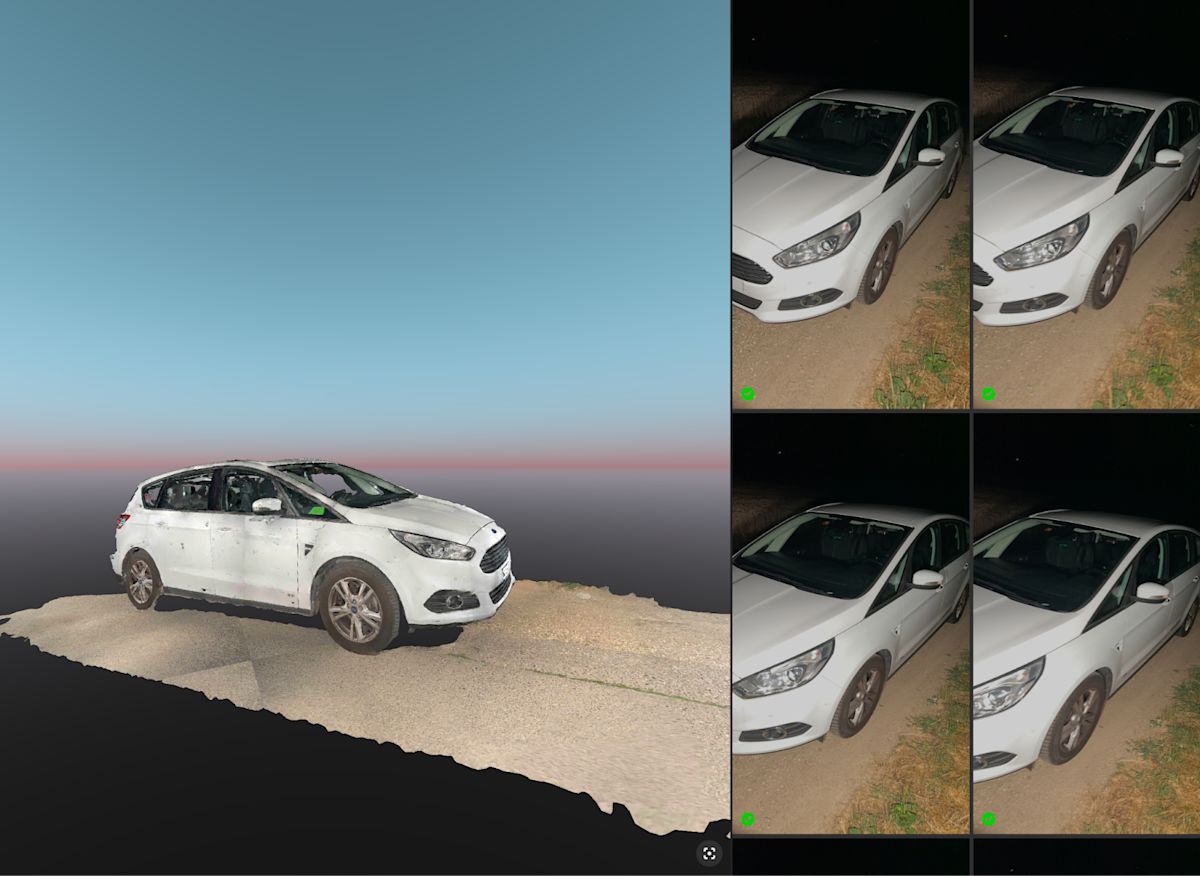
In the example above, the car was captured in complete darkness. The acquisition pattern was the same as during a daylight capture. The project was processed in PIX4Dmatic using the default PIX4Dcatch template. The manual intervention involved setting up a region of interest around the car and a little bit of manual point cloud cleaning of black artifacts around the car's rooftop. Artifacts that are normally removed by an ML algorithm, such as sky segmentation, do not work very reliably at night for obvious reasons.
Early adoption case study with Slovak police force
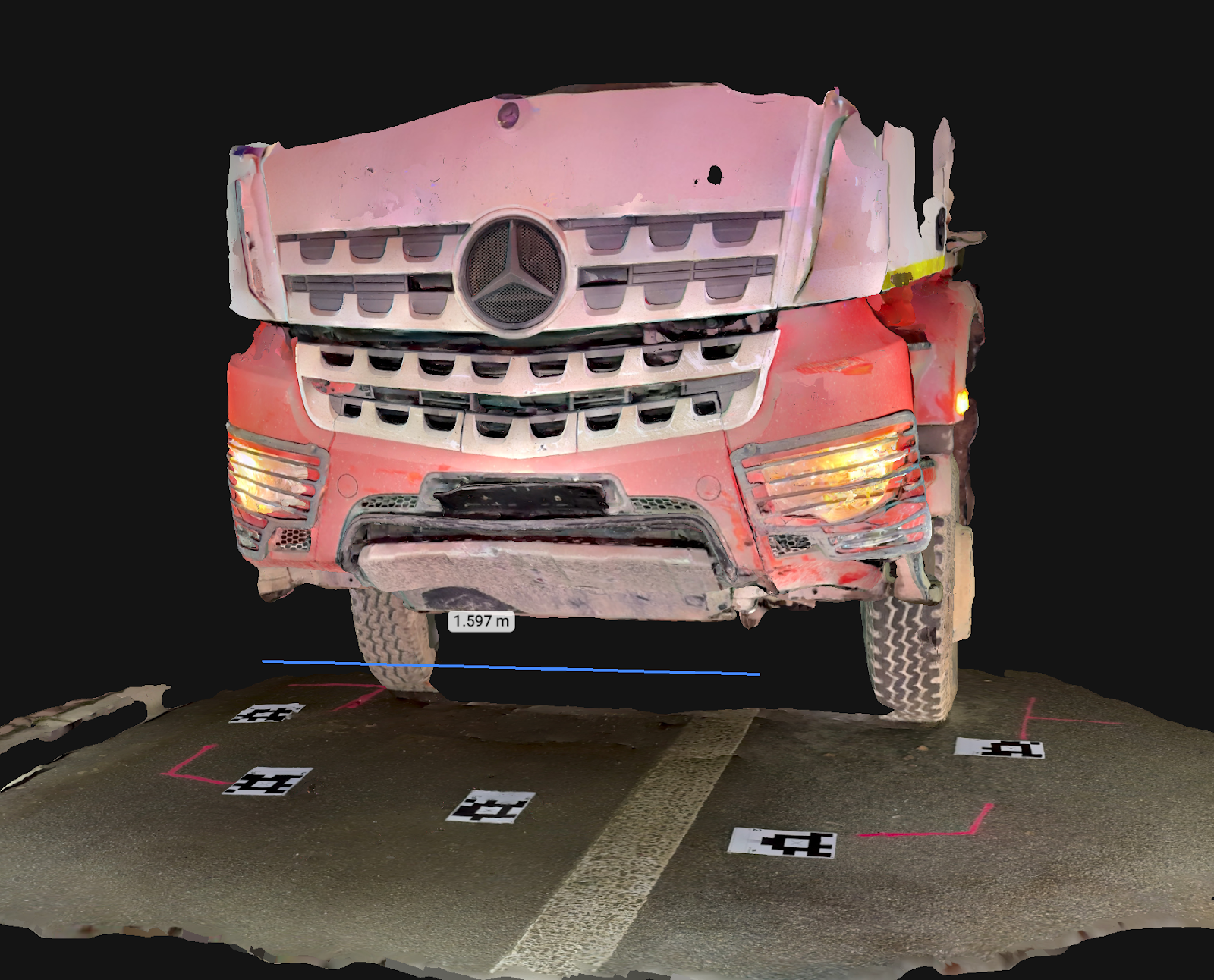
The Slovak Police Force, specifically Lukáš Župa (Senior Traffic Accident Investigation Officer, OR PZ ODI Košice -okolie, Slovakia), is currently conducting experiments with PIX4Dcatch and an auxiliary lighting configuration for nighttime accident documentation, drawing upon the challenges and solutions previously investigated. While this this isn’t the official standard yet, a specialized police unit is currently is actively piloting the technique.
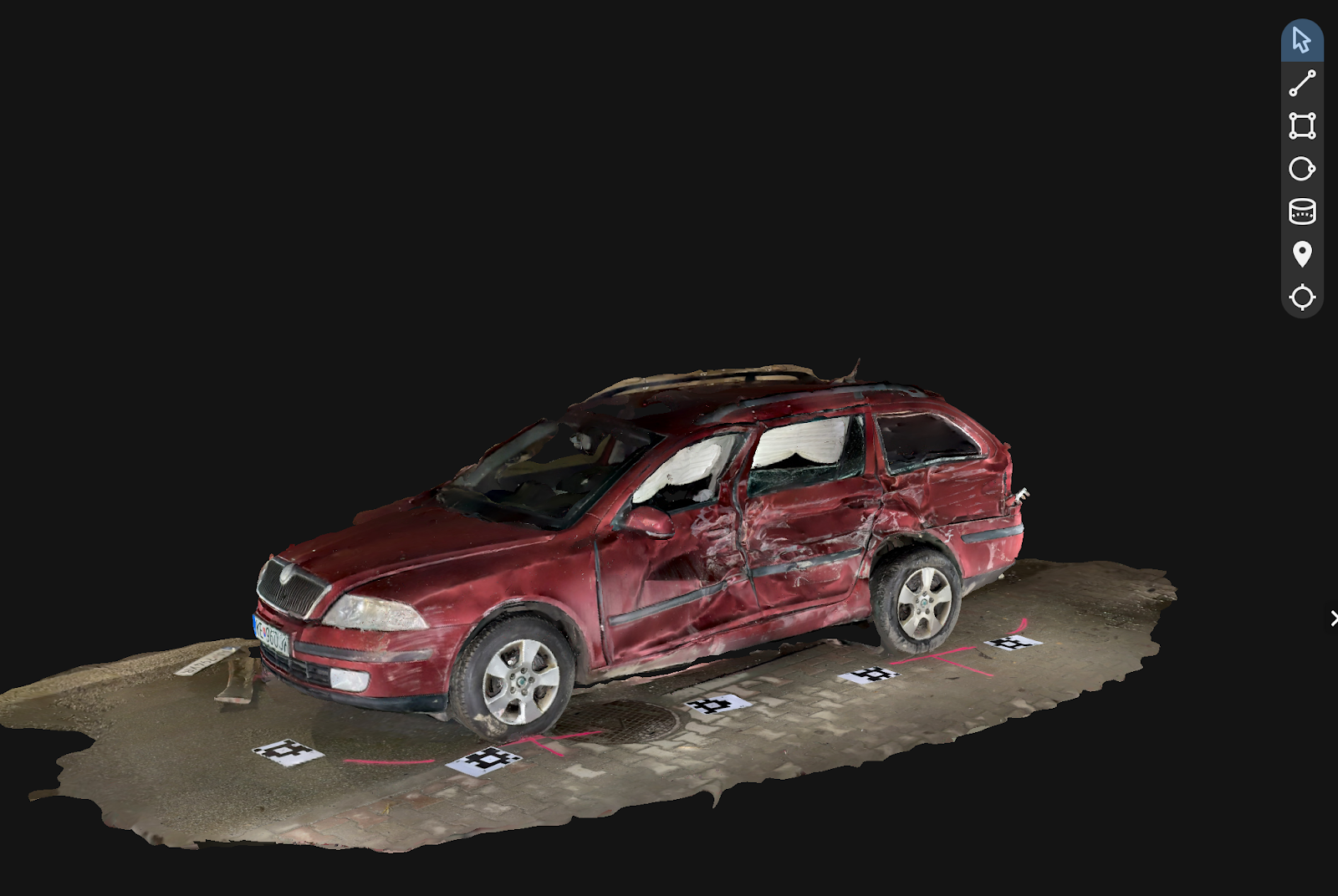
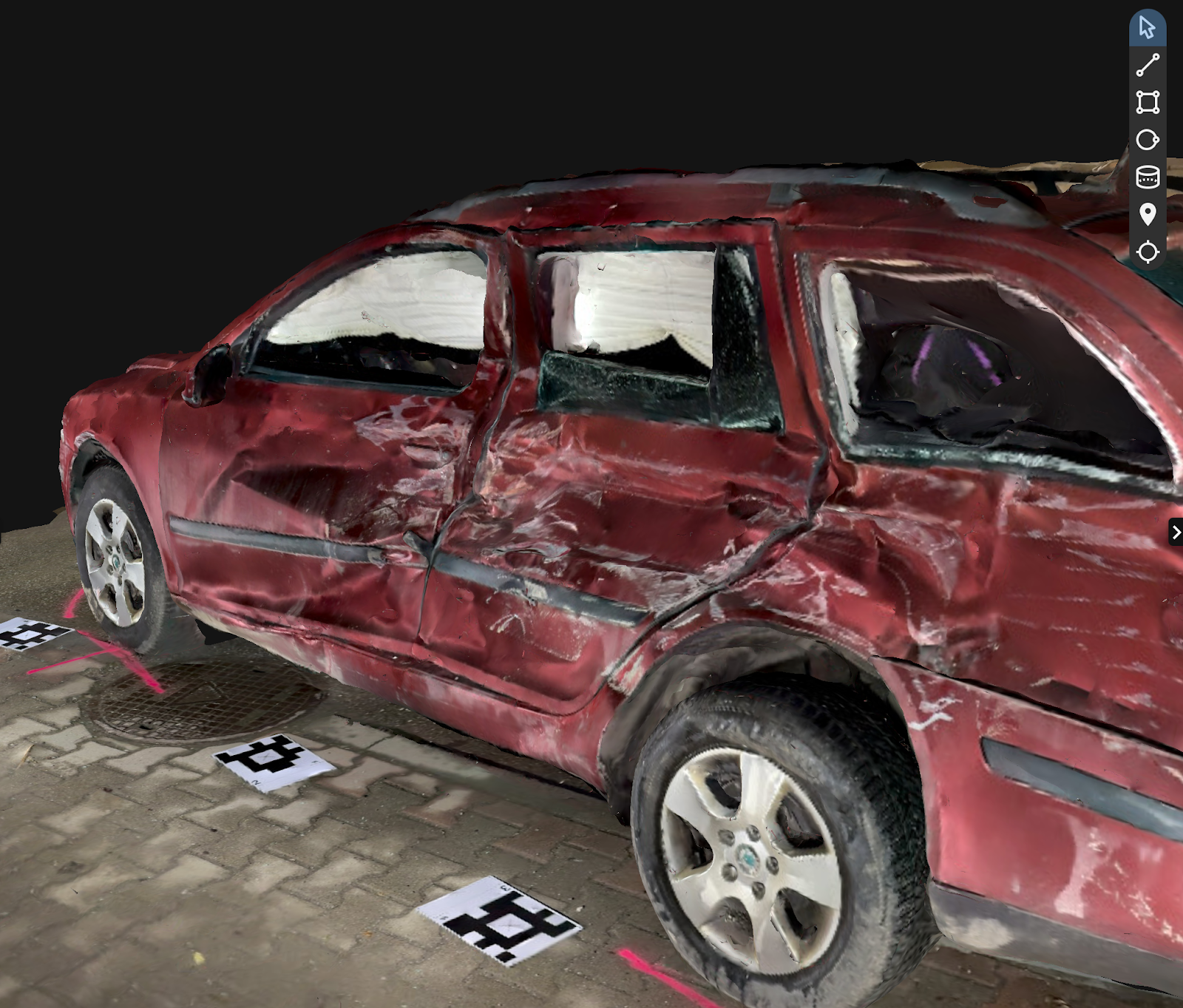
We are happy to share early results from their field tests, which confirms the viability of this approach for generating high-quality forensic data under challenging low-light conditions. Lukáš has utilized this method on several occasions in real-world scenarios to document accidents in both daylight and nighttime conditions.